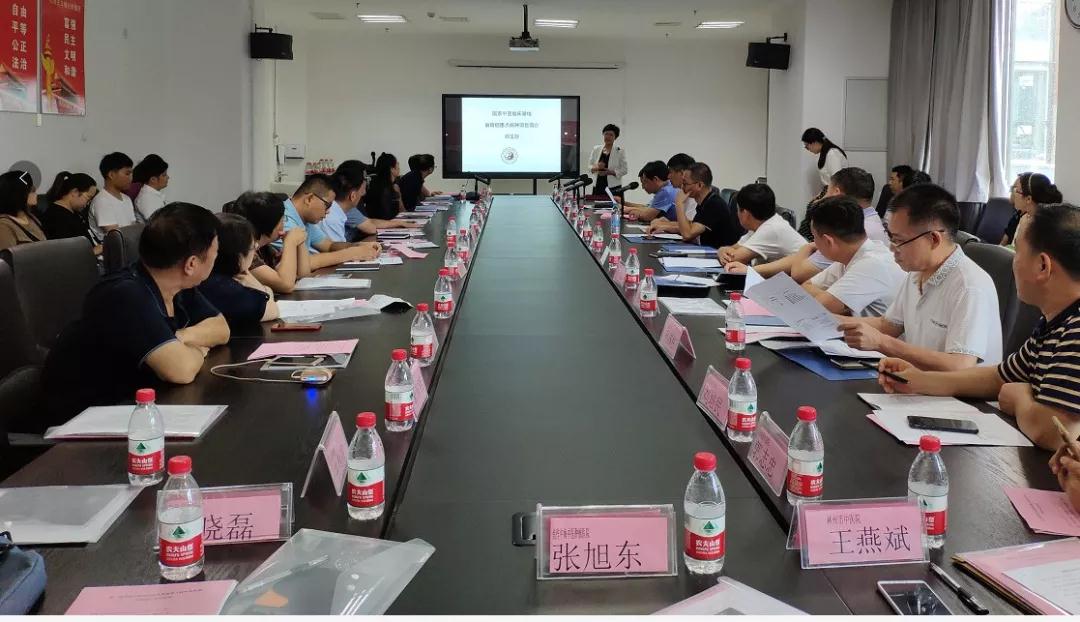
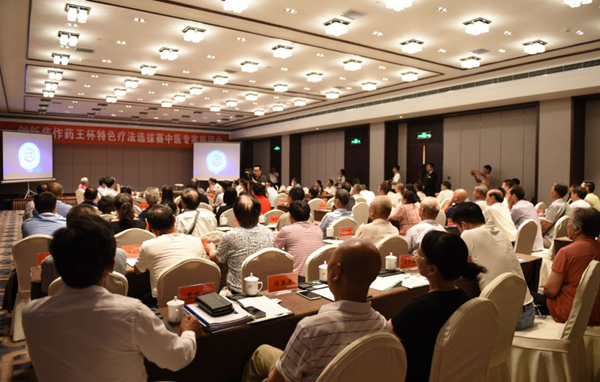
Recently, good news came from the reexamination of an advanced lung cancer patient receiving integrated traditional Chinese and Western medicine treatment at Jiaozuo Zhonghai TCM Cancer Hospital. Multiple lesions in her body shrank significantly and her physical condition improved remarkably, fully demonstrating the unique advantages of collaborative Chinese and Western cancer treatment.
The patient, Ms. Huang, 45 years old, is a native of Linyi, Shandong Province. Two months ago, she sought medical attention due to dizziness and fatigue, and was diagnosed with advanced right lung adenocarcinoma. Her condition was critical, accompanied by extensive metastases in the right hilar, mediastinal, cervical and supraclavicular lymph nodes, as well as multiple brain metastases. After receiving urgent cranial radiotherapy at a local hospital, she began taking the targeted drug entrectinib. Seeking a better therapeutic effect, Ms. Huang was referred to our hospital by a friend for adjuvant TCM treatment.
At the initial visit, the patient was severely troubled by cancer-related discomfort and treatment side effects. She suffered from persistent dry cough with a small amount of yellow sputum after a cold, weakness in both lower limbs, severe poor appetite, loss of taste, and acid regurgitation in the mouth after meals. After a detailed diagnosis, Director Zhang identified her TCM syndrome as intermingled phlegm and blood stasis combined with spleen and stomach deficiency, and established the therapeutic principles of strengthening healthy qi to consolidate the root, invigorating the spleen and harmonizing the stomach, as well as resolving phlegm and eliminating masses.
Based on her condition, Director Zhang formulated a targeted individualized regimen. She continued standardized oral administration of entrectinib while receiving combined TCM therapy. The treatment adopted an empirical TCM formula for lung tumors modified according to her symptoms to relieve cough, poor appetite and other discomforts, together with the hospital’s special preparation Hua’ai Xiaoliu Powder to enhance the effect of resolving stagnation and shrinking tumors.
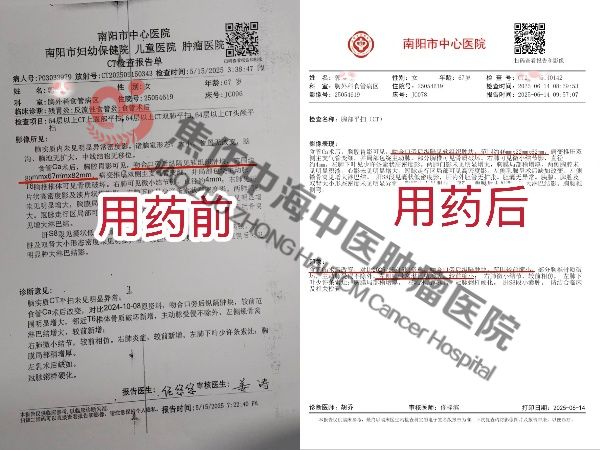
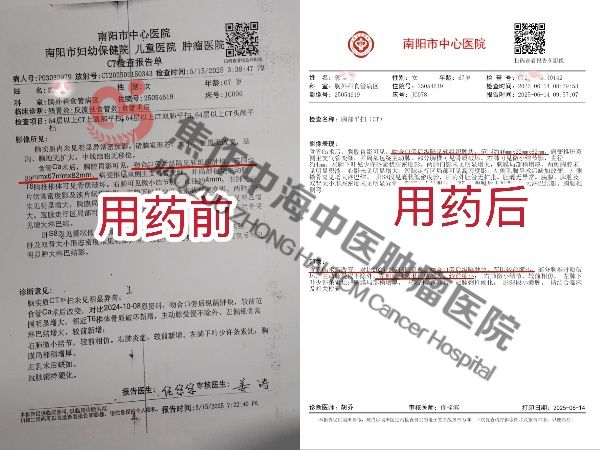
The treatment progressed smoothly with remarkable results. After 8 days of medication, the patient reported that her cough and sputum were basically relieved, and the weakness of both lower limbs was greatly improved, reflecting the rapid symptomatic relief of traditional Chinese medicine. Imaging reexamination conducted 35 days later brought exciting results: compared with previous images, the primary pulmonary lesion and multiple metastatic lymph nodes were all markedly reduced in size.